 comparison
Is Faith Based Coaching Worth It for Professionals?
Table of Contents
- What Faith-Based Coaching Offers Working Professionals
- Faith-Based Coaching vs Traditional Coaching: A Structured Comparison
- The Real Costs and Return on Investment
- Christian Leadership Coaching: Professional Use Cases and Workplace Outcomes
- Biblical Mentorship for Leaders: Following a Seasoned Mentor
- Faith-Based Leadership Development: What the Evidence Shows and Where It Limits
- How to Choose a Coach and What to Expect
- Conclusion: Is Faith-Based Coaching Worth It for You?
- Frequently Asked Questions
Last Updated: October 14, 2026
What Faith-Based Coaching Offers Working Professionals
Faith based coaching is a structured relationship in which a coach helps a client pursue personal and professional goals while treating spiritual beliefs and values as the foundation of the work, not a side topic. For working professionals, that matters.

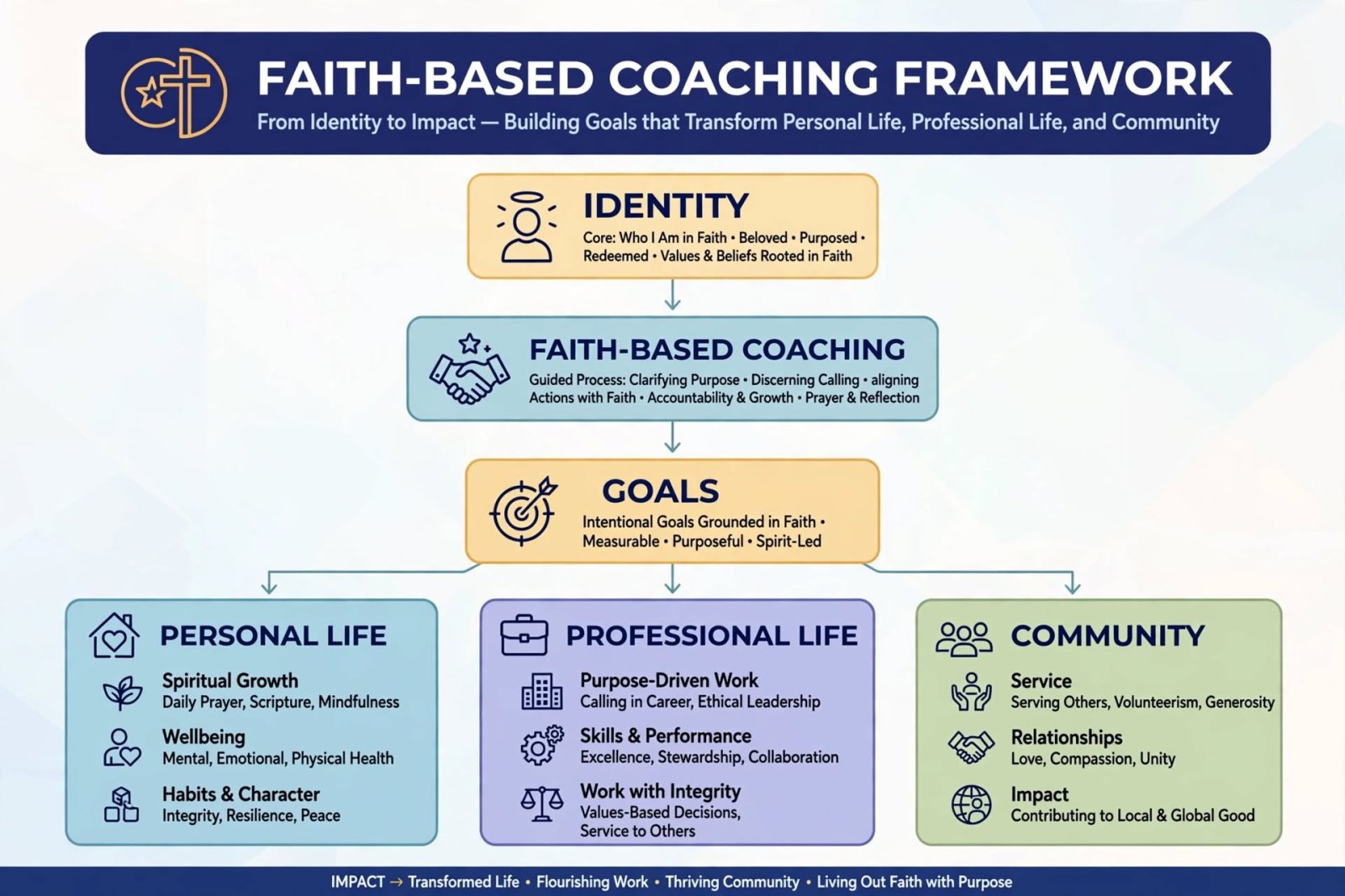
Most coaching models start with goals. Faith-based coaching starts with identity, then builds goals on top of it. The result is a different kind of conversation: one where career decisions, leadership pressure, and personal integrity get examined together rather than in separate compartments.
The Core Difference: Values as a Foundation
The defining feature of faith-based coaching is that it works from a values system rather than around one. Sessions still cover goal setting, accountability, and clarity.
A coach in this model asks what your faith says about how you lead, how you handle conflict, and how you define success.
Under a coach's guidance, a faith-based value system becomes practical rather than abstract.
Faith-Based Coaching vs Traditional Coaching: A Structured Comparison
Faith-based coaching and traditional coaching differ mainly in their foundation. Traditional coaching typically stays neutral on spiritual matters and focuses on performance, behavior, and measurable goals. Faith-based coaching adds a values framework and often a shared vocabulary of belief.
Dimension | Faith-Based Coaching | Traditional Coaching |
|---|---|---|
Foundation | Spiritual beliefs and values | Performance and behavior |
Goal setting | Aligned to purpose and calling | Aligned to targets and outcomes |
Accountability | Rooted in shared convictions | Rooted in commitments and metrics |
Tools | Reflection, discernment, scripture | Assessments, frameworks, feedback |
Best fit | Clients who want faith integrated | Clients who want faith excluded |
Where Each Approach Excels
Traditional coaching wins when the problem is purely operational. A sales leader who needs a better pipeline review cadence does not need a theological discussion.
Faith-based coaching wins when the questions are bigger. Should I take this promotion if it costs my family?
A common mistake is treating the two as rivals. They are not. The right choice depends on what you are actually trying to solve.
The Real Costs and Return on Investment
What You Are Actually Buying
A coaching engagement is a structured relationship with several components:
- Time, typically one to two hours per session plus preparation and follow-through between sessions
- Emotional labor, the honesty required to bring real problems into the room rather than curated ones
- Opportunity cost, the other ways you could spend that time and money
When professionals say coaching "wasn't worth it," the cause is usually one of the last three, not the first. A coach who never gets past surface issues can cost more in wasted time than one who moves you quickly.
A Return Framework for Working Professionals
Return on a coaching investment rarely shows up as a line item. It shows up in decisions you did not have to reverse, conflicts you did not have to repair, and roles you did not take for the wrong reasons. Here is how to make that concrete before you commit:
- Name the decision or pattern you want to change. "I want to stop dreading Monday" is not specific enough. "I want to stop agreeing to commitments that violate my priorities" is.
- Estimate what the current pattern costs you. Time lost, relationships strained, opportunities declined, energy spent managing internal conflict.
- Define what "working" looks like in observable terms. Fewer reactive emails. A boundary you actually held. A conversation you initiated instead of avoided.
- Set a review point. Most engagements should show directional movement within the first several sessions. If nothing has shifted by then, that is data.
Under a coach's guidance, faith based coaching gives this framework a spine. The question is not only "did the metric move" but "did I become the kind of person I want to be while the metric moved." That second question is where faith-based coaching earns its place for professionals who care about both.
When the Math Does Not Work
Honest assessment means naming the cases where coaching is the wrong purchase:
- If you are in acute crisis, a mental health emergency, a safety issue, a legal matter, coaching is not the right service. Seek a licensed professional.
- If you cannot name a specific area you want to change, you are not ready to coach. You are ready to reflect.
- If you cannot be honest with the coach, no framework will save the engagement.
The Compounding Effect
The strongest argument for faith-based coaching under a seasoned mentor is not a single decision improved. It is the pattern that changes. A leader who learns to handle conflict with integrity in one meeting carries that into the next, and the next.
That is the honest version of the ROI case: not a guaranteed multiple, but a compounding return on character and competency developed together.
Christian Leadership Coaching: Professional Use Cases and Workplace Outcomes
Christian leadership coaching applies faith-based principles to the specific pressures of leading people. The use cases are concrete, and they show up in workplaces every week.
Consider a team leader who loses his temper in review meetings.
Other common use cases:
- Preparing for a promotion without compromising how you treat people
- Repairing a damaged relationship with a direct report or peer
- Setting boundaries around workload and availability
The throughline is that faith-based leadership development treats character and competency as connected. Improving one without the other tends to produce leaders who hit a ceiling.
Biblical Mentorship for Leaders: Following a Seasoned Mentor
Discipleship in this model means following a seasoned mentor, not attending a lecture series. That distinction shapes everything about how the relationship works.
A mentor who has already led teams, weathered failures, and held to his convictions offers something a curriculum cannot: pattern recognition. He can tell you which battles are worth fighting because he has fought some of them.
Discipleship also runs in the other direction. Leaders who are being mentored tend to mentor others, which multiplies the effect across a team or organization. That is the mechanism by which a faith-based value system spreads: person to person, over time.
Faith-Based Leadership Development: What the Evidence Shows and Where It Limits
Honest assessment matters here, and most articles in this space avoid it. Coaching research generally supports the idea that structured coaching relationships help people set and reach goals, and that accountability improves follow-through. What the evidence does not establish is that faith-based coaching outperforms secular coaching on those same measures.
That is a real limit, and it is worth stating plainly.
What Coaching Can Do
- Improve goal clarity and follow-through through structured accountability
- Surface patterns a person cannot see from inside their own situation
- Provide a confidential space to test decisions before making them
What Coaching Cannot Do
- Treat clinical depression, anxiety, trauma, or addiction, those require licensed care
- Replace medical, legal, or financial advice
- Force change in someone who is not willing to be honest
If you are unsure which category your situation falls into, that uncertainty is itself worth raising in an introductory call. A reputable coach will tell you when the answer is "this is not a coaching issue."
Where Faith-Based Coaching Has an Advantage That Is Harder to Measure
When a client's stated values and their daily decisions line up, internal conflict drops. Many professionals describe that relief as the main benefit, and it is not something a purely neutral model is designed to produce.
That is not a measurable outcome in the clinical sense. It is a qualitative one, and it is legitimate. The mistake is treating it as a substitute for measurable outcomes rather than a complement to them.
Harvard Business Review on coaching effectiveness
A Practical Way to Judge Your Own Engagement
Before you start, write down three things:
- The specific behavior or decision you want to change
- How you will know it changed, in observable terms
- What you are willing to do differently to make it change
At each review point, compare your notes against reality. If the behavior moved, the engagement is working. If it did not, ask why, and be willing to hear an answer you did not expect. Under a seasoned mentor's guidance, that willingness to be corrected is often the difference between a coaching engagement that produces real change and one that produces a pleasant conversation.
How to Choose a Coach and What to Expect
Choose a coach the way you would choose any professional advisor: verify training, ask about approach, and test fit before committing. Certification and accreditation vary by program, so ask what training your prospective coach completed and who issued it.
What to expect in a well-run engagement:
- An initial conversation to establish goals and fit
- A clear agreement covering frequency, format, and cost
- Regular sessions with specific action items between them
- Periodic review of progress against your stated goals
- A defined way to end the relationship if it is not working
Conclusion: Is Faith-Based Coaching Worth It for You?
For professionals who want their faith and their work treated as one life rather than two, faith-based coaching is worth the investment. The value shows up in clearer decisions, steadier leadership, and less internal conflict.
Philip Larson offers practical books and resources on faith-based leadership, personal development, and team dynamics.
Get started with Philip Larson and take the next step toward leading with conviction.
Contact me now! Include a brief comment on an issue that you face. Let’s get started.
Frequently Asked Questions
Is faith-based coaching worth it for professionals?
It depends on what you need. If you want a coaching relationship that integrates your spiritual beliefs with career and leadership goals, faith-based coaching can provide clarity and accountability that secular programs may not address. The value comes from working with a qualified coach who understands both professional demands and your values. Professionals often find the structured goal setting and discernment process helps them make decisions with confidence, especially in high-pressure roles where personal integrity matters.
How is faith-based coaching different from traditional life coaching?
Traditional coaching focuses on goals, performance, and accountability without reference to spiritual beliefs. Faith-based coaching adds a values layer: sessions may include prayer, scriptural reflection, and discernment as part of the coaching relationship. A Christian leadership coaching engagement, for example, might explore how biblical truths inform a hiring decision or a conflict with a team member. The coaching techniques are similar, but the foundation and the language differ.
Can faith-based coaching help with leadership and workplace decisions?
Yes, for many professionals. Faith-based leadership development often centers on character, integrity, and service, which are directly applicable to managing teams, handling conflict, and making ethical calls under pressure. A coach trained in biblical mentorship for leaders can help you work through a difficult conversation with an employee or evaluate whether a business opportunity aligns with your values. The practical outcome is better decision-making and stronger interpersonal dynamics at work.
How do you choose a faith-based coach?
Look for three things: credentials, fit, and clarity about boundaries. Ask whether the coach has completed a recognized coach training program or holds accreditation. Discuss their approach to faith: do they pray in sessions, reference Scripture, or leave that to you? Check whether they offer a free consultation so you can assess fit before committing. A good coach will be transparent about their coaching practices and what they can and cannot help with. Trust your discernment during the initial conversation.
What should professionals expect from a faith-based coaching relationship?
Expect a structured process that includes goal setting, self-reflection, accountability, and practical action steps. Sessions typically run 45 to 60 minutes, weekly or biweekly, and may open with prayer or a brief devotional thought. Your coach will ask questions that connect your professional challenges to your values and calling. You should also expect professional boundaries: a coach is not a therapist or a financial adviser. If a coach promises specific income results, that is a red flag.