 how-to
Overcoming Societal Pressure for Men: A Practical Guide
Table of Contents
- Understanding Societal Pressure for Men
- Overcoming the Provider Protector Performer Pressure
- How to Build Authentic Identity for Men
- How to Set Boundaries as a Man
- Breaking Free From Behavioral Stereotypes
- Building Supportive Social Circles
- Navigating Digital-Age and Workplace-Specific Pressures
- Conclusion
- Faith Activate
- Frequently Asked Questions
Last Updated: October 2, 2026
Understanding Societal Pressure for Men
Societal pressure for men shapes how millions approach work, relationships, and their sense of self. The expectations placed on men, to be providers, protectors, and performers, often run so deep that men don't recognize them as pressures at all. They feel like facts.
Philip Larson offers resources for men navigating these exact challenges. The men who break free from these constraints don't do it by accident. They do it through intentional awareness and practical steps that challenge the narratives they've internalized since childhood.
The Three P's: Provider, Protector, Performer
Most men grow up absorbing three core expectations. The first is Provider, the belief that a man's worth is tied directly to his income and ability to support others financially. The second is Protector, the idea that strength means shielding others from harm, never showing vulnerability. The third is Performer, the constant pressure to succeed, compete, and prove competence in every arena.
These three roles aren't inherently bad. The problem emerges when they become rigid. When a man loses his job, the Provider identity crumbles. When vulnerability feels dangerous, the Protector role isolates him emotionally. When failure feels like personal collapse, the Performer burns out.
The real cost isn't just stress. It's disconnection from authentic identity beneath these roles.
How Pressure Shapes Mental Health
When men internalize these three pressures without questioning them, mental health often suffers in silence. Anxiety builds when a man feels he's failing at any of these roles. Depression can follow when external circumstances, job loss, relationship changes, health issues, strip away the identity he's built on performance and provision.
What makes this particularly damaging is emotional suppression. Many men learn early that showing feelings signals weakness. So instead of processing anxiety or grief, they bury it. Instead of seeking help, they isolate. This isn't character strength. It's a path toward breakdown.
Research shows that men are significantly less likely than women to seek mental health support, even when struggling. The barrier isn't access, it's the belief that seeking help violates masculinity itself.
Overcoming the Provider Protector Performer Pressure
Breaking free from these three roles requires first recognizing how they operate in your daily life. Then comes the harder work: deciding which parts serve you and which parts need to change.
Recognizing When Pressure Becomes Toxic
Toxic pressure shows up as a constant internal voice telling you that you're not enough. It manifests as:
- Defining yourself entirely through work performance or financial status
- Avoiding conversations about struggles or emotions
- Feeling shame when you can't "handle everything" alone
- Measuring your worth against other men's achievements
- Sacrificing relationships or health to maintain an image
The shift happens when you notice the cost.
Moving Beyond Performance-Based Worth
Your intrinsic value isn't earned through achievement. This is perhaps the most radical idea a man shaped by societal pressure can embrace. Yet it's foundational to breaking free.
How to Build Authentic Identity for Men
Building authentic identity means discovering who you actually are beneath the roles you've been taught to play. This requires honest self-examination and willingness to disappoint others.
Distinguishing Your Values From External Expectations
External expectations come from family, culture, peer groups, and media. They feel universal because they're everywhere. But they're not yours.
Start here:
- Write down three things your family expects from you as a man
- Write down three things you actually care about
- Notice where they overlap and where they conflict
- In areas of conflict, which direction pulls you most strongly?
Cultivating Emotional Intelligence and Vulnerability
Emotional intelligence is the ability to recognize, understand, and work with emotions, yours and others'. For men shaped by suppression, this is a skill that must be built deliberately.
Start small:
- Share one genuine struggle with someone you trust
- Listen to a friend's problem without trying to fix it
- Name an emotion you're feeling instead of pushing it down
- Ask for help with something you'd normally handle alone
How to Set Boundaries as a Man
Setting boundaries is often framed as selfish. For men shaped by provider and protector roles, it feels like abandonment. In reality, healthy boundaries protect both you and your relationships.
Practical Boundary-Setting in the Workplace
The workplace is where many men first learn to suppress themselves. Long hours, constant availability, and the pressure to appear invulnerable become normalized.
Boundaries in this context might look like:
- Leaving work at a reasonable hour, even when others stay late
- Declining projects that would compromise your wellbeing
- Being honest about capacity instead of overcommitting
- Taking vacation days without guilt
- Speaking up about unfair treatment
Saying No Without Guilt or Shame
"No" is a complete sentence. Yet many men treat it as the beginning of a negotiation.
Practice these phrases:
- "I can't take that on right now"
- "That doesn't work for me"
- "I need to think about it and get back to you"
- "I appreciate you asking, but I'm going to pass"
Breaking Free From Behavioral Stereotypes
Behavioral stereotypes about masculinity are so ingrained that most men never question them. Breaking free means recognizing which stereotypes serve you and which ones limit you.
Emotional Suppression and Its Cost
The stereotype is clear: real men don't cry, don't complain, don't admit fear. The cost of this belief is staggering. Men who suppress emotions report higher rates of anxiety, depression, and addiction. They have shorter lifespans and more health problems (the WHO).
Emotional suppression isn't strength, it's a slow breakdown.
Redefining Strength and Resilience
Strength used to mean dominance, invulnerability, and control. That definition is outdated. Real strength in modern life looks different:
- Admitting when you're wrong
- Asking for help when you need it
- Staying present during difficult conversations
- Facing your fears instead of running from them
- Changing your mind when presented with new information
Building Supportive Social Circles
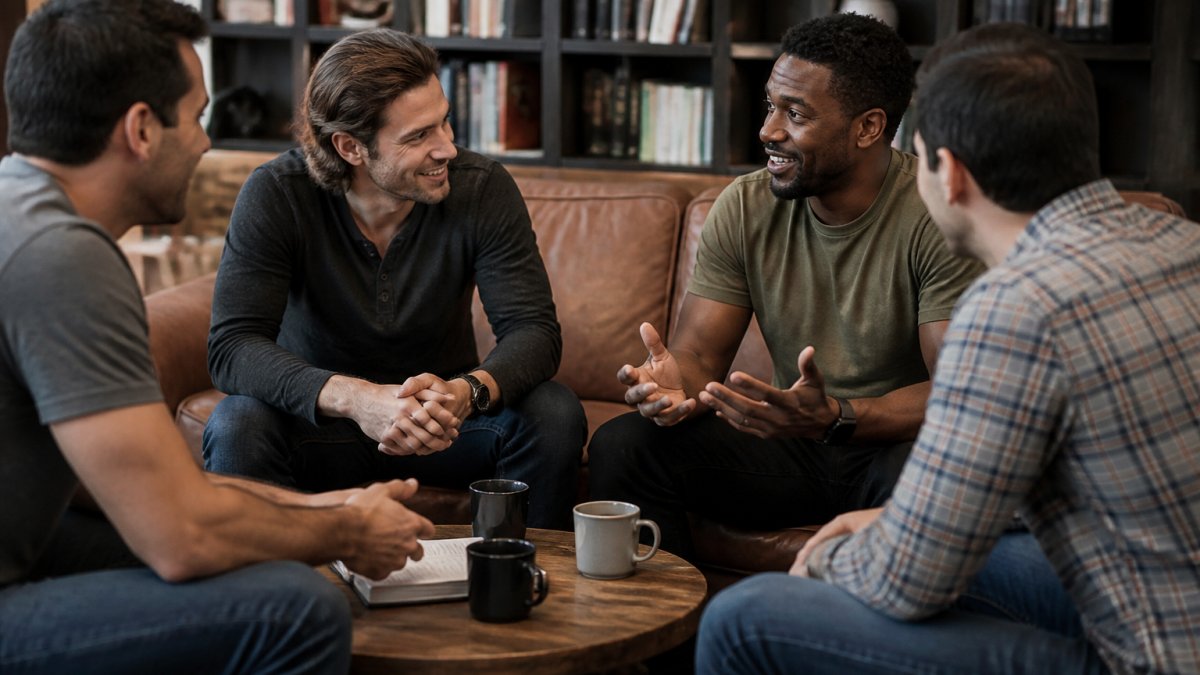
One of the most damaging effects of societal pressure for men is isolation. Men are taught to be self-sufficient, which often translates to loneliness.
The Role of Mentorship and Fatherhood
Mentorship works both directions. An older man who models emotional health and authenticity gives younger men permission to develop these qualities. A younger man who asks genuine questions and shows vulnerability reminds older men that strength includes tenderness.
Finding Your Community
Real community means people who know you and accept you anyway. Not people who accept the performance. People who accept the actual person.
This might be:
- A small group of men who meet regularly to talk honestly
- A faith community that values authenticity
- A therapy or counseling group
- Friends willing to go deeper than surface-level conversation
- A mentorship relationship with someone further along
Navigating Digital-Age and Workplace-Specific Pressures
Modern life adds new layers to old pressures. Digital platforms amplify comparison. Workplace dynamics shift but expectations remain rigid.
Social Media and the Comparison Trap
Social media shows you curated versions of other men's lives. The highlight reels create impossible standards. You compare your behind-the-scenes to everyone else's front-stage performance.
Professional Identity vs. Personal Authenticity
Many men compartmentalize: one version at work, another at home. This split is exhausting and ultimately unsustainable.
This consistency builds trust, with others and with yourself.
Conclusion
Overcoming societal pressure for men is possible. It requires awareness of where pressure operates in your life, willingness to question inherited beliefs, and courage to choose authenticity over approval.
Faith Activate
Frequently Asked Questions
What are the 3 P's of masculinity and how do they create pressure?
The three P's—Provider, Protector, and Performer—represent traditional masculine roles that create constant pressure on men. Provider pressure demands financial success; Protector pressure expects men to shield others from harm; Performer pressure requires achievement and dominance in every arena. These roles, while sometimes valuable, become toxic when internalized as the only measure of a man's worth. When men tie their self-acceptance entirely to these roles, they suppress vulnerability, avoid seeking help, and risk anxiety and depression when they inevitably fall short.
How does societal pressure impact men's mental health?
Societal pressure on men drives emotional suppression, which correlates with higher rates of depression, anxiety, and addiction. Men often internalize the message that seeking help is weakness, so they suffer in silence rather than reach out for counseling or support. This creates a cycle where psychological well-being deteriorates unaddressed. The pressure to conform to gender roles prevents men from developing emotional intelligence and authentic coping mechanisms, leaving them vulnerable to trauma and burnout.
Why is it difficult for men to express vulnerability in modern society?
Vulnerability is often framed as the opposite of strength in traditional masculinity narratives, creating stigma around emotional expression. Men learn early that displaying feelings signals weakness, so they develop behavioral stereotypes of stoicism and dominance. This cultural conditioning runs deep—from peer pressure in childhood to workplace dynamics in adulthood. Breaking this pattern requires conscious effort to redefine strength as including emotional honesty, resilience through connection, and the courage to ask for help.
What practical steps can men take to stop living for the approval of others?
Start by identifying your intrinsic values separate from external expectations—what matters to you independent of others' opinions. Set clear boundaries by practicing saying no to requests that don't align with your priorities. Build a supportive social circle where you can be authentic without judgment. Challenge the voice in your head that equates your worth with performance or achievement. Regular mindfulness or counseling can help you notice when you're seeking approval and gently redirect toward self-acceptance. Finally, redefine success on your own terms rather than accepting inherited definitions of masculinity.