 listicle
Best Leadership Books for Character Development
Table of Contents
- Why Leadership Books Matter for Character Development
- Books on Leadership and Integrity
- Leadership Books for New Managers
- Faith-Based Leadership Books
- Books on Character Development and Personal Growth
- How to Choose the Right Leadership Book for Your Situation
- Building Your Leadership Reading Plan
- Frequently Asked Questions
Last Updated: October 17, 2026
Why Leadership Books Matter for Character Development

The difference between a competent manager and a transformational leader often comes down to character. Yet many professionals approach leadership development through skills training alone, communication workshops, strategy seminars, tactical certifications. What they miss is that sustainable leadership influence requires something deeper: intentional character development.
Best leadership books for character development address this gap. They move beyond quick fixes and surface-level advice to explore who you are becoming as a leader. When you invest time in reading about leadership grounded in integrity, purpose, and personal growth, you're not just learning techniques. You're reshaping how you think, decide, and show up for your team.
The challenge is finding books that deliver practical value, not just philosophical musing. You need resources that connect character traits directly to leadership outcomes. That's why we've curated this guide: to help you identify books on leadership and integrity that actually move the needle on how you lead.
Books on Leadership and Integrity
Integrity is the foundation of trust. Without it, no amount of charisma or strategic thinking will sustain your influence. Books in this category focus on the non-negotiable values that define how you lead when no one's watching.
Good to Great by Jim Collins remains a cornerstone in this space. Collins spent years studying companies that made the leap from good to great, and a consistent finding emerged: the best leaders combined humility with unwavering commitment to their values. The book doesn't preach ethics, it shows through real examples how integrity and excellence move together. This is essential reading if you lead an organization or manage teams responsible for long-term results.
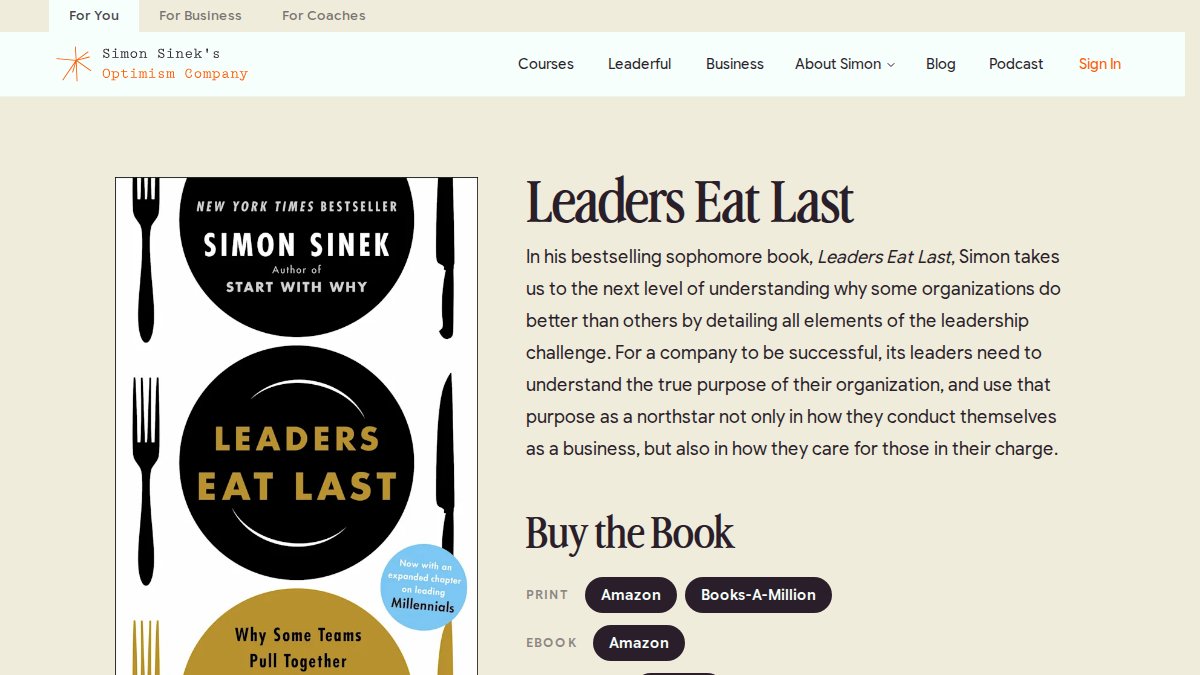
Leaders Eat Last by Simon Sinek approaches leadership integrity from a different angle: the biology of trust. Sinek argues that leaders who prioritize the wellbeing of their teams create psychological safety, which unlocks discretionary effort and loyalty. His framework is grounded in how our brains respond to threat and safety. If you struggle with whether your team actually trusts you, or if you're building a new team from scratch, this book provides both the "why" and the practical "how."
The common thread: integrity isn't a trait you have or don't have. It's a practice. Both these books show leaders how to build systems, habits, and decision-making processes that reinforce ethical choices under pressure.
Leadership Books for New Managers
Stepping into your first management role is disorienting. You're suddenly responsible for people's development, performance, and morale. Many new managers make the mistake of thinking leadership is about being smarter or working harder than their team. These books correct that misconception early.
The 21 Irrefutable Laws of Leadership by John C. Maxwell is structured for exactly this moment. Maxwell distills leadership into 21 foundational principles, influence, respect, trust, vision, and others. Each chapter tackles one law with clarity and brevity. For a new manager drowning in decisions, this book offers a reference guide you'll return to repeatedly.
Developing the Leader Within You 2.0, also by Maxwell, builds on that foundation. This one is more hands-on. It includes assessments, reflection questions, and exercises designed to help you identify your leadership strengths and gaps. If you're the type who benefits from structured workbooks over narrative books, this is a better fit than The 21 Irrefutable Laws.
The Five Dysfunctions of a Team by Patrick Lencioni is a fable-based approach to team dynamics. Lencioni identifies five root causes of team dysfunction: absence of trust, fear of conflict, lack of commitment, avoidance of accountability, and inattention to results. The book walks through a fictional team's journey to fix these issues. New managers often recognize their own teams in this narrative, which makes the insights stick.
These three form a solid foundation for new managers: broad principles, personal development work, and team-focused frameworks.
Faith-Based Leadership Books
For leaders grounded in faith, faith-based leadership books integrate spiritual principles with practical management. These resources don't compartmentalize your values, they show how faith informs how you lead.
EntreLeadership by Dave Ramsey takes a faith-informed approach to building and leading organizations. Ramsey's background in business and faith shapes his perspective on what makes teams thrive. The book covers culture, accountability, communication, and vision through a lens that values both excellence and integrity. If you're building a business or leading within a faith-based organization, this book speaks directly to that context.
Philip Larson's own resources deserve mention here. His work on faith-based leadership combines decades of pastoral experience with direct knowledge of business challenges. Larson integrates character development, emotional intelligence, and team dynamics with a faith foundation. His approach to leadership emphasizes personal transformation as the prerequisite for leading others well, a principle that resonates across Christian leadership communities.
The distinction in this category is intentionality. Faith-based leadership books aren't trying to convert readers; they're helping leaders who already hold faith apply those convictions to their work. If you're skeptical about whether faith-based resources will feel preachy, the better ones, including those from Philip Larson, focus on practical outcomes and character formation rather than doctrine.
Books on Character Development and Personal Growth
Character development sits at the intersection of self-awareness and intentional practice. These books focus on the internal work that precedes external leadership effectiveness.
Radical Candor by Kim Scott addresses a specific character challenge many leaders face: how to care personally while demanding excellence professionally. Scott's framework, radical candor, ruinous empathy, obnoxious aggression, and manipulative insincerity, gives you language for the conversations you're avoiding. The book is short, practical, and filled with real examples from Scott's time at Google and Apple. If you struggle with difficult conversations or worry that directness will damage relationships, this book reframes that tension. Character development here means building the courage to be both caring and honest.

Multipliers by Liz Wiseman explores how leaders either amplify or diminish the intelligence around them. Wiseman identifies two leadership archetypes: multipliers who bring out the best in their teams, and diminishers who inadvertently shut people down. The book profiles real leaders in each category and shows the specific behaviors that create each dynamic. Character development through this lens means recognizing how your presence affects others and choosing to expand rather than contract their contribution.
These books share a common insight: your character is revealed not in isolation but in how you affect others. They're less about becoming a "good person" in abstract terms and more about the specific ways your choices shape your team's performance and growth.
How to Choose the Right Leadership Book for Your Situation
Not every book works for every leader at every stage. The best choice depends on where you are in your leadership journey and what specific challenge you're facing.
If you're new to management, prioritize books that give you a framework for thinking about leadership itself. The 21 Irrefutable Laws of Leadership or Developing the Leader Within You 2.0 provide that scaffolding. They're not deep dives into any single topic, but they orient you to the landscape.
If you're struggling with a specific interpersonal dynamic, team trust, difficult conversations, accountability, choose a book that addresses that challenge directly. Radical Candor for communication, The Five Dysfunctions of a Team for team dynamics, Multipliers for how you affect others.
If you're leading from a faith perspective or want to integrate your values more deliberately into your leadership, EntreLeadership and Philip Larson's resources offer that integration without treating faith as supplementary.
Consider also your learning style. Some leaders thrive with narrative-based books like Leaders Eat Last or The Five Dysfunctions of a Team, where stories make concepts stick. Others prefer structured frameworks like The 21 Irrefutable Laws or Radical Candor, where each chapter builds systematically. Workbook-style resources like Developing the Leader Within You 2.0 suit leaders who need reflection exercises and assessments.
The honest truth: reading alone doesn't change behavior. You need reflection, application, and ideally accountability. Choose a book that addresses your current growth edge, then commit to working through it deliberately.
Building Your Leadership Reading Plan
Effective character development through reading requires structure. Random reading, picking up whatever looks interesting, rarely produces sustained change.
Start by identifying your leadership priority for the next six months. Are you building team trust? Learning to lead with integrity under pressure? Developing your influence? Let that priority guide your first book selection.
Set a reading rhythm you can sustain. Many leaders find that 15-20 minutes daily, or one hour weekly, is realistic. Consistency matters more than volume.
Create a simple reflection practice. After each chapter, write one sentence answering: "What's one way I'll apply this?" This bridges the gap between insight and action.
Consider pairing your reading with community. Join a leadership book club, discuss what you're learning with a peer, or find a mentor who's read the same book. External accountability and different perspectives deepen your learning.
| Reading Phase | Duration | Focus | Reflection |
|---|---|---|---|
| Selection | 1 week | Identify priority and choose book | Write your leadership question |
| Active Reading | 8-12 weeks | 15-20 min daily or 1 hour weekly | One application per chapter |
| Integration | 4 weeks | Implement one key change | Track impact on team or self |
| Reflection | 2 weeks | Assess what shifted | Plan next book or deeper work |
This structure transforms reading from passive consumption into active character development.
The best leadership books for character development aren't shortcuts. Whether you're new to management, struggling with a specific challenge, or intentionally deepening your faith-based leadership, the right book at the right time can shift how you think about your role.
Start with one book that addresses your immediate growth edge. If you're seeking resources grounded in practical faith-based leadership, Philip Larson's work on character and leadership development offers the kind of integrated approach that helps leaders grow both personally and professionally.
Frequently Asked Questions
What makes leadership books effective for character development?
Leadership books work by combining real-world examples, proven frameworks, and reflective exercises that help you identify gaps between your current character and your aspirations. The best ones go beyond theory, they connect specific character traits like integrity, resilience, and emotional intelligence to practical situations you'll actually face. When you actively reflect on what you read and apply it to your own decisions, books become a tool for intentional growth rather than passive entertainment.
Which books on leadership and integrity are best for beginners?
Books on leadership and integrity that work well for beginners focus on clear principles rather than complex organizational theory. Look for titles that define what integrity means in everyday situations, show how character affects team trust, and provide actionable steps you can start immediately. The most effective ones include reflection questions or exercises that help you examine your own values and decision-making patterns before moving on to advanced leadership concepts.
Are faith-based leadership books only for religious professionals?
No. Faith-based leadership books often address universal character challenges, managing anger, building trust, making ethical decisions under pressure, and serving others, through a spiritual lens. Readers with different faith backgrounds or secular perspectives frequently find value in the practical wisdom and character frameworks these books offer. The key is finding a book whose approach resonates with your worldview while addressing the specific leadership challenges you face.
How long does it typically take to see results from reading leadership books?
Reading alone won't change your character or leadership effectiveness. Real results come from reflection, application, and practice. Most readers begin noticing shifts in their thinking within 2-4 weeks of active engagement, discussing key ideas with others, journaling about how concepts apply to their situation, or testing specific strategies with their team. Sustainable character development usually takes 3-6 months of consistent practice, which is why building a structured reading plan matters more than rushing through multiple books.
What should new managers prioritize when selecting leadership books?
New managers should prioritize books that address their immediate challenges: building credibility with teams, making tough decisions, communicating expectations clearly, and managing their own stress. Leadership books for new managers work best when they focus on practical scenarios you'll encounter in your first year rather than abstract leadership philosophy. Look for titles that include real examples from first-time managers and offer specific techniques you can apply in your next team meeting or one-on-one conversation.